You have your offer, your CAS and maybe even a flight in mind. Then you open the document checklist and notice that half your paperwork is written in Bangla.
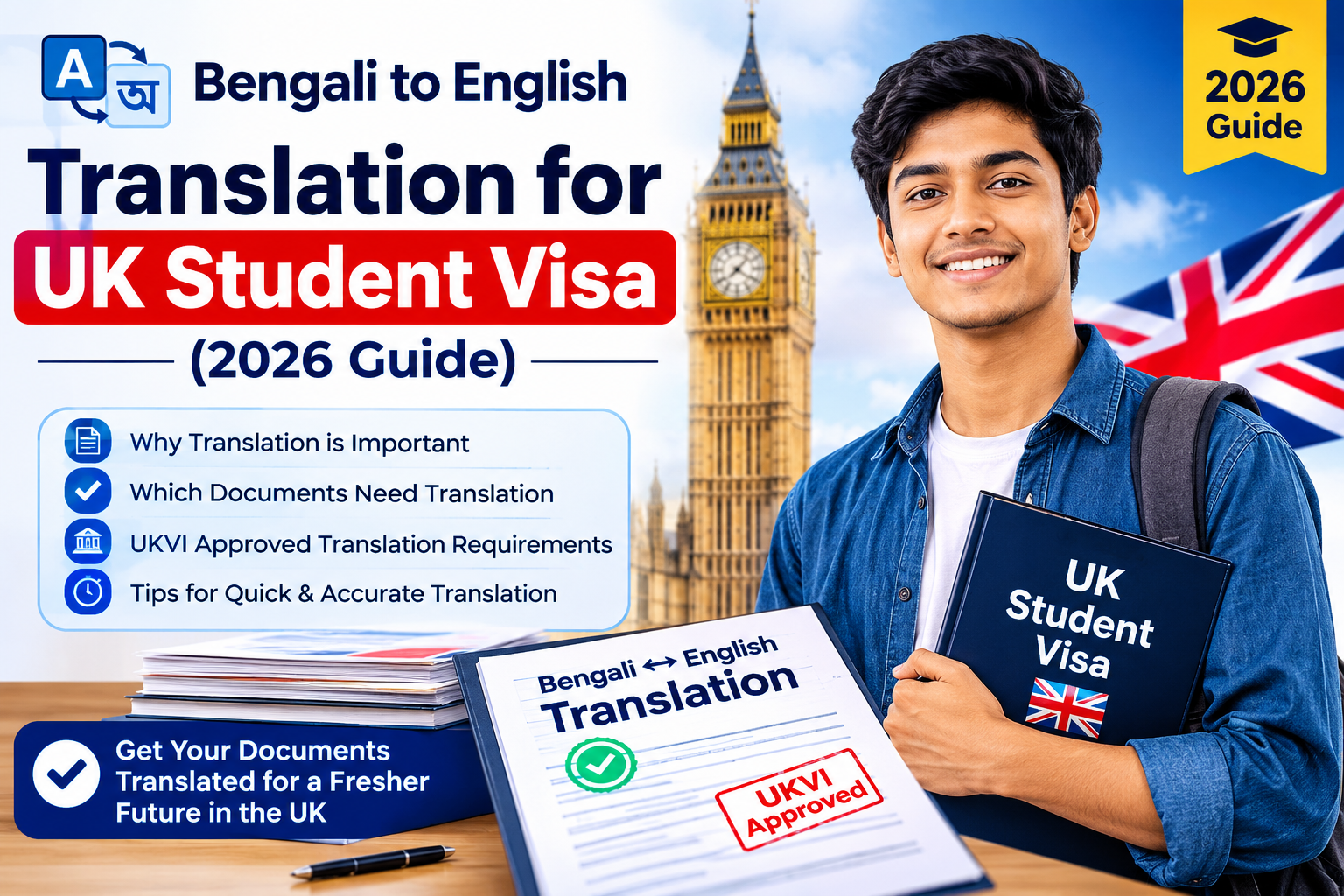
That is the moment Bengali to English translation for a UK student visa stops being a small detail and becomes a real task. GOV.UK says that if any document you provide is not in English or Welsh, it needs a certified translation. Get it right and nobody notices. Get it wrong and you may face a request for more evidence, a delay or even a refusal, often just weeks before your course starts.
This guide explains which Bangladeshi documents usually need translating, what a certified translation must contain, who can and cannot produce one, and how it fits with the financial evidence rules. It also gives you a practical timeline and a checklist. SE Translations offers Bangla translation for visa applications, and this guide is built on current GOV.UK guidance and university requirements rather than guesswork.
Quick Answer: What Do You Need?
Short answer: If any document you submit is not in English or Welsh, include a certified English translation. The translator should confirm in writing that it is a true and accurate translation, add the date of the translation, and give their full name and contact details. Many UK universities also ask for the translator’s signature and credentials, so it is safest to include all of these. Do not translate your own documents.
What UKVI Expects From a Translation
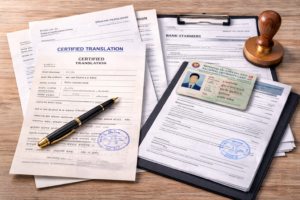
The GOV.UK page on certifying documents says a translator should confirm in writing that the translation is a true and accurate translation of the original, state the date, and provide their full name and contact details. That is the legal baseline.
In practice, universities and caseworkers often look for a little more. Birmingham City University, for example, asks for the translator’s credentials and an original signature, and warns that if even one requirement is missing you will need a new translation. The sensible approach is to treat the strictest version as the standard. A good provider of certified Bengali to English translation will include every one of these elements by default.
A certified translation should therefore carry:
- A signed statement that the translation is complete and accurate
- The date of the translation
- The translator’s full name and signature (or that of an authorised company representative)
- Contact details for the translator or company
- A short note of the translator’s credentials or professional standing
One more point is worth stating plainly. Requirements can differ slightly between the Home Office, your university and a specific caseworker. Always read the checklist inside your own application and your sponsor’s international office guidance before you order anything.
Which Documents Usually Need Translation?
Not every applicant needs every document translated. It depends on your age, how you are funding your studies and who is applying with you. The table below shows the usual position for Bangladeshi applicants.
| Document | Translation needed? | What to watch |
| CAS | No | Your university issues it in English. |
| Passport | Usually no | The personal details page already includes English. |
| Birth registration certificate | Only if not fully in English | Needed to show your parents’ names if you are under 18. Many are issued in both languages, so check yours first. |
| Parental consent letter (under 18) | Yes, if written in Bangla | GOV.UK says consent must cover the visa application, your living and care arrangements, and your travel to the UK. |
| Bank statements and bank letters | Yes, if not fully in English | Translate the whole document, not a summary. |
| Academic certificates and transcripts | Yes, if in Bangla or partly in Bangla | Often needed at the university application stage and sometimes again as evidence. |
| Sponsorship letter or affidavit | Yes, if in Bangla | Keep names consistent with your passport. |
| Marriage certificate (Nikahnama) | Yes, if in Bangla | Needed if a spouse applies as your dependant. |
If your spouse or children are applying with you, the paperwork grows quickly. Marriage and birth documents then become part of the evidence, and our guide to Bangla immigration translation explains how those documents are usually handled.
Because applications differ, GOV.UK itself says the exact evidence depends on your circumstances. Use this table as a starting point and then cross-check it against your own application.
Who Can Translate Your Documents?
This is where many students get caught out. GOV.UK asks for a certified translation but does not publish a licensing scheme for translators in the way some countries do. What universities and caseworkers expect is a professional translator or translation company, with contact details that can be checked.
In plain terms, these options are risky:
- Translating your own documents. You have a personal interest in the outcome, so the translation is not independent.
- A relative or friend. Even if they are fluent, there is no professional accountability.
- Free machine translation. It cannot certify anything, and it often misreads names, stamps and handwriting.
Choosing an experienced agency is the lower-risk path. Our overview of certified translation services in the UK explains what to look for and what the certification involves.
Do You Need Notarisation?
Usually not. The GOV.UK steps for certifying a translation do not ask for notarisation. Some organisations in other contexts do, so if your university or a caseworker specifically asks for it, follow that instruction. Otherwise, there is no need to pay for it.
Bangladesh-Specific Details That Cause Trouble
Translating a Bangladeshi document is not the same as translating a letter. The small details are where errors creep in, and caseworkers compare the English text line by line with the original.
- Name spelling. If your passport says “Mohammad” and your certificate says “Muhammad”, the translation should follow the passport and note the original spelling where needed. Your parents’ names should match across documents too.
- Dates and numerals. Bangla numerals and some local date styles should be converted carefully. Use an unambiguous format such as 05 March 2024.
- Stamps, seals and handwriting. These should be described in the translation, and any unreadable text should be marked as illegible rather than guessed.
- Place names. Districts, upazilas and unions need consistent English spellings across every document.
Regional language matters too. Applicants from Sylhet, Moulvibazar, Habiganj and Sunamganj sometimes hold affidavits or handwritten letters that use Sylheti phrasing rather than standard written Bangla. Our article on why Sylheti to English translation matters explains how this can change the meaning of a sentence.
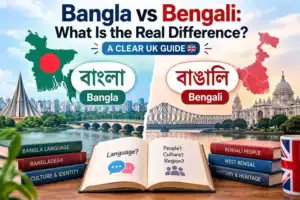
You may also see the terms Bangla and Bengali used for the same language on different forms. If that confuses you, this short explainer on Bangla vs Bengali clears it up. For your visa, it makes no difference, but the translation itself must be accurate.
Bank Statements and the 28-Day Rule
Financial evidence is where translation and visa rules meet. GOV.UK says you must show enough money to cover your course fees for the first year (up to nine months) plus living costs. At the time of writing, living costs are £1,529 a month in London and £1,171 a month outside London, for up to nine months.
You must hold that money for at least 28 days in a row, and the 28-day period must end within 31 days of the date you apply. These figures can change, so check the GOV.UK Student visa money page before you apply.
If your bank statements or bank letters are not fully in English, the entire document needs translating, including every transaction line, account names, balances and bank stamps. A summary page is not enough. Our page on Bangla bank statement translation explains how long statements are usually handled.
Academic Documents and University Requirements
You may need translated certificates and transcripts before you even receive your CAS. Universities often ask for them during admission, and the same documents can come up again if UKVI asks for more evidence.
Check your sponsor’s rules first, because some universities specify exactly how translations must be presented. If you are preparing degree certificates, mark sheets or transcripts, see our notes on Bangla academic translation for the details that tend to matter.
Step-by-Step: Getting Your Translation Done Properly
- List your documents early. Check your application checklist and your university’s guidance, then note which papers are not fully in English.
- Scan everything clearly. Capture every page, including stamps, seals and the back of a page if it has writing. Use good light and avoid shadows.
- Ask for a fixed quote. Send your scans and confirm the price, the delivery time and what the certification will include.
- Check the draft details. Compare names, dates and numbers with your passport before the translation is finalised.
- Receive the certified translation. It should be signed, dated and laid out to mirror the original as closely as possible.
- Upload or submit as instructed. Follow your application’s instructions on sending the original document, a scan or a copy, along with the translation.
- Keep a copy of everything. You may need the same translations later, for example at an interview or a future application.
As a rule of thumb, start at least three to four weeks before you plan to apply. That allows time for your 28-day funds period, any corrections and a sensible margin for delays.
What Does Translation Cost?
There is no flat national price. Cost usually depends on the number of pages, how complex the layout is, how clear your scans are, how much handwriting there is, and how fast you need it. A one-page certificate costs far less than a long bank statement. Urgent same-day work usually carries a premium.
Ask for a fixed quote before you commit, and ask whether certification, revisions and delivery are included. For a detailed breakdown, see our guide to Bangla translation cost in the UK.
If you want a wider view across languages, our article on how much you should pay for translation services covers the main price factors.
Seven Mistakes That Delay Student Visa Applications
- Leaving it too late. Rushed work is more likely to contain errors and usually costs more.
- Different name spellings. Make sure every translated document matches the passport spelling.
- Translating only part of a document. Partial or summarised translations are risky, especially for bank statements.
- Missing certification details. A fluent translation with no signed statement, date or contact details does not meet the standard.
- Using a friend, relative or app. Independence and accountability matter.
- Ignoring layout. Caseworkers compare the translation against the original, so headings, stamps and tables should line up.
14.Poor scans. If a stamp or figure is unreadable, the translator cannot reproduce it accurately.
These are the same traps we see across many types of paperwork. Our guide to common official document translation mistakes shows more examples and how to avoid them.
Pre-Submission Checklist
Before you attach anything to your application, run through this list:
- Every name matches your passport spelling, including your parents’ names
- Dates use a clear, consistent format
- The translator’s statement, signature, date and contact details are visible
- Every page of multi-page documents has been translated, not only the summary page
- Stamps, seals and letterheads are described in the translation
- The translation clearly matches the original document it belongs to
- You know whether to submit the original, a scan or a copy with the translation, and you have followed your application’s instructions
Missing even one of these can trigger a request for further evidence. It is worth asking your translation provider to confirm these points before delivery.
How to Choose a Translation Provider
Before paying, ask a few direct questions:
- Do you provide a signed certification statement with every translation?
- Will the translation include your full name, contact details and credentials?
- Have your translators worked with Bangladeshi civil, academic and banking documents?
- Can you handle Sylheti or other regional wording?
- Will you correct any error free of charge?
- How do you protect my personal data and documents?
You can read about our trusted translators and how we work.
If you would like a fixed quote for your documents, contact SE Translations with your document list and your application deadline.
Conclusion
Bengali to English translation for a UK student visa is one of the most controllable parts of your application. You cannot change your grades or the date you opened your bank account, but you can make sure every Bangla document is translated accurately, certified properly and presented clearly.
Start early, follow GOV.UK and your university’s guidance, use an independent professional translator and check every name and date against your passport. Do that, and your translations will support your application instead of slowing it down. If you still have questions, our FAQ page covers other common translation queries.
Frequently Asked Questions
Do I need to translate my CAS?
No. Your university issues the CAS in English, so it does not need translation. What may need translating are the Bangla documents you use as supporting evidence, such as financial documents, consent letters or certificates.
Can I translate my own documents if I speak good English?
It is not safe to do so. A certified translation needs an independent translator who confirms accuracy and provides contact details. You have a personal interest in the outcome, so a self-translation lacks that independence, however fluent you are.
Does a translation need to be notarised?
Normally not. The GOV.UK steps for certified translations ask for a written confirmation of accuracy, the date and the translator’s details, not notarisation. Only arrange it if your university or a caseworker specifically asks.
How long does a certified Bangla to English translation take?
It depends on length and complexity. Standard one or two page documents are often finished within 24 to 48 hours, while long bank statements take longer. For a general overview of the service, see our Bangla translation page, and allow extra time if you need corrections.
What happens if my translation is rejected or UKVI asks for more evidence?
You will usually be asked to provide a corrected or additional document, which can delay your decision. This is why it is better to get the certification details right first time. If a translator’s statement is missing, ask the provider to reissue it, and respond to any request within the deadline you are given.