Search for a translator in the UK and you will soon notice something odd. Some websites talk about Bangla translation. Others talk about Bengali translation. A few use both words on the same page. So are you looking at two languages, or one language with two names?
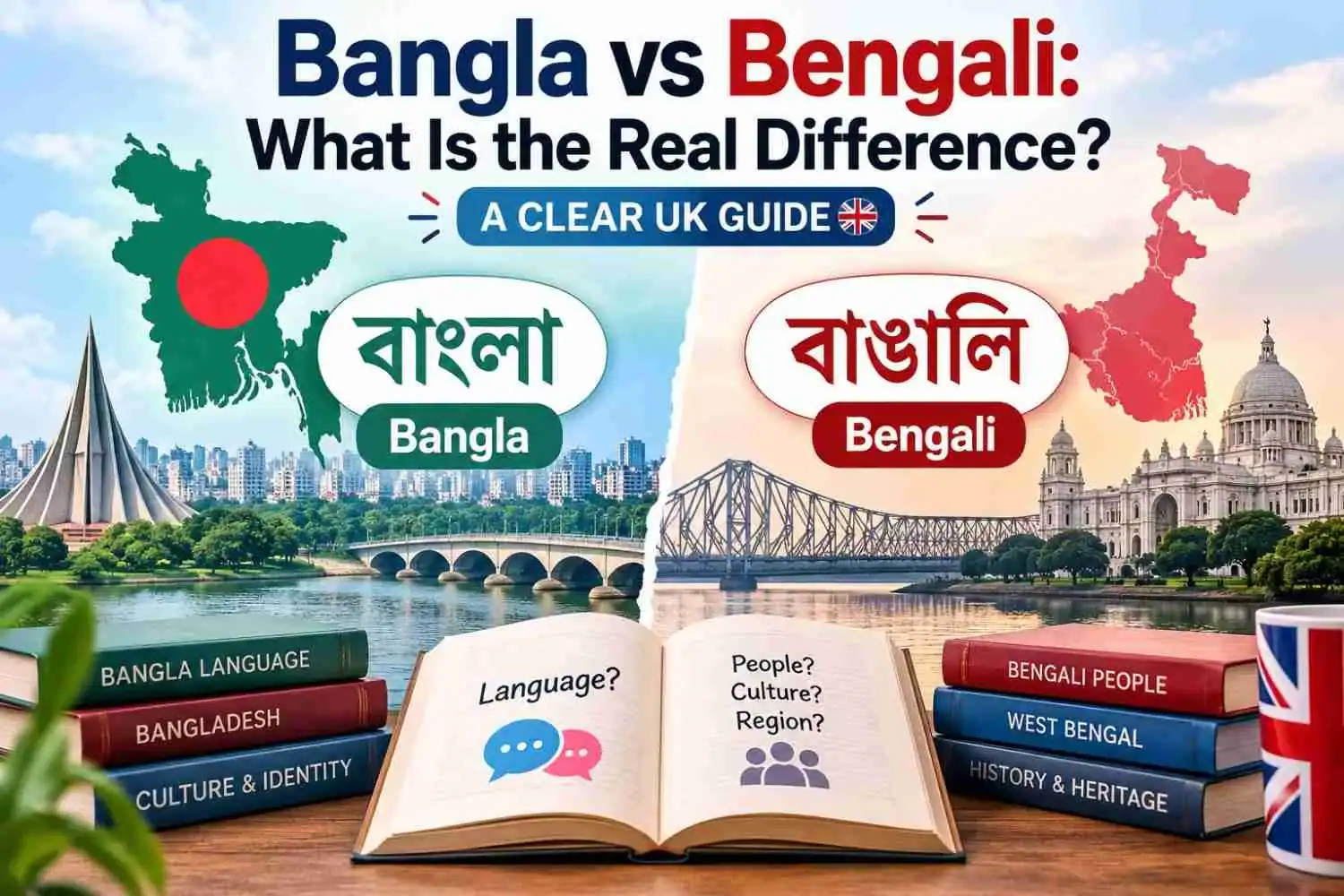
Here is the short answer. It is one language. Bangla is the name its speakers use. Bengali is the name most English speakers use. The choice of word still matters more than people expect, especially when you are sending documents to the Home Office, a court, a university or an NHS service.
This guide explains the Bangla vs Bengali question in plain English. It also shows what the difference means in practice if you need Bengali to English translation in the UK.
Bangla vs Bengali: The Quick Answer
Bangla (বাংলা) and Bengali are two names for the same language. They share the same grammar, the same vocabulary, the same script and the same literature. There is no “Bangla version” and “Bengali version” of the language. Only the label changes.
The easiest way to think about it is the way we talk about Deutsch and German, or Español and Spanish. One is the speakers’ own word. The other is the English word.
| Name | Who mostly uses it | Where you will usually see it |
| Bangla | Native speakers, writers, the Bangladeshi government | Everyday speech, Bangladeshi documents, community groups, social media |
| Bengali | English speakers, UK and Indian institutions, dictionaries | Government forms, the census, university systems, most search results |
Where Do the Two Names Come From?
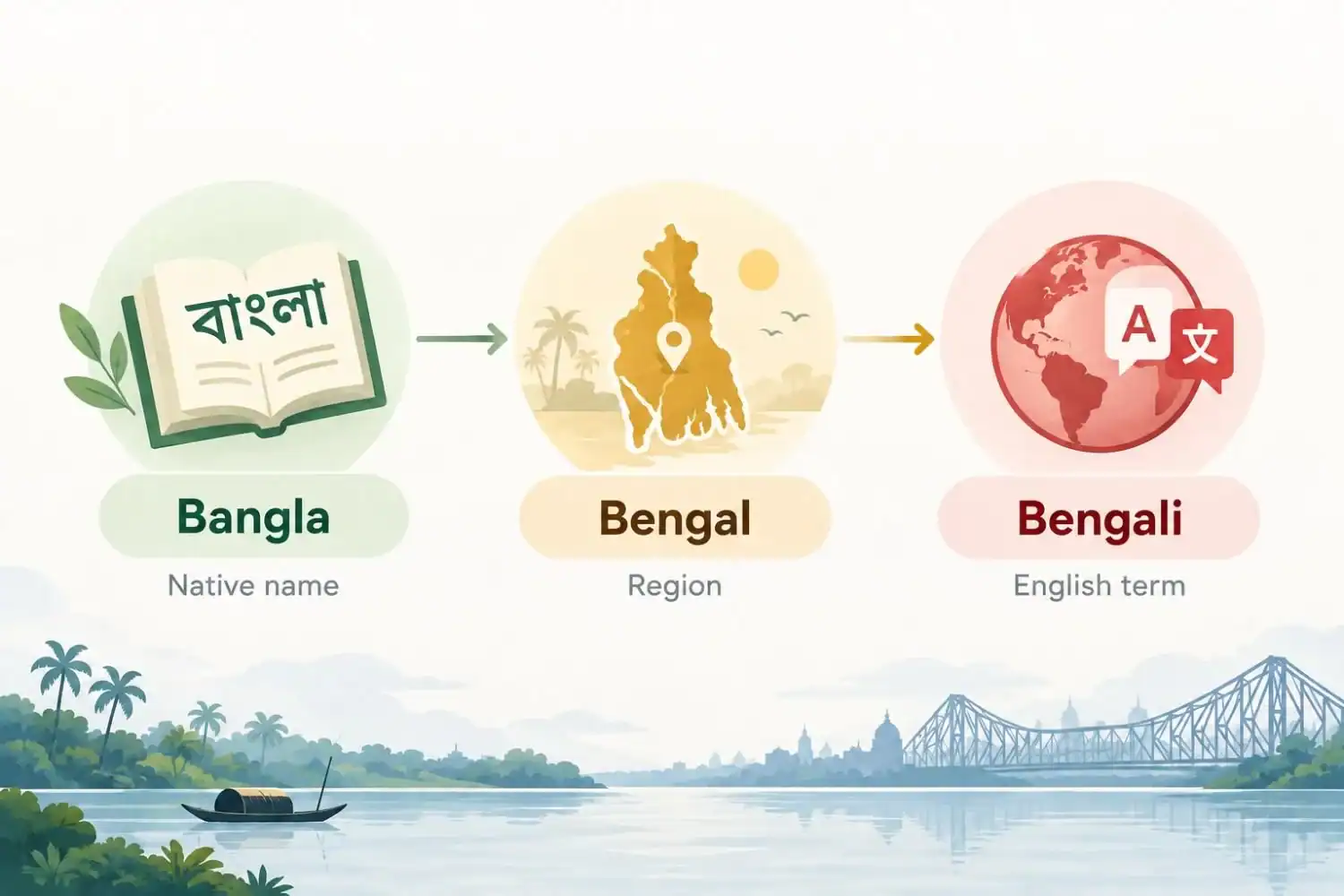
“Bangla” comes straight from the language itself. It is the word Bengali speakers have always used for their own tongue. It also sits inside the name of Bangladesh, which means “the land of Bangla speakers”.
“Bengali” is the English form. It grew out of the way European traders and later colonial administrators wrote the name of the region, Bengal. English then added the usual “-i” ending to describe the people and the language, much like Punjabi or Gujarati.
So neither word is wrong. One is an insider’s name. The other is an outsider’s name that has become standard in English.
Which Name Should You Use?
The honest answer is that it depends on your audience. Here is a practical rule of thumb.
- Talking to Bangladeshi or Bengali-speaking communities: use “Bangla”. It feels natural and respectful.
- Filling in UK government forms: use “Bengali”. That is the term most UK forms, census categories and case-management systems expect.
- Writing for search engines: include both. Many people in the UK type “Bengali translation” while others type “Bangla translation”, so a good page should cover each.
- Ordering a translation: either word works. What matters is that the translator can read the source language and certify the result properly.
If you are unsure, you can simply write “Bangla (Bengali)” and nobody will be confused.
Who Speaks the Bengali Language Around the World?
The Bengali language is one of the biggest in the world. Estimates put the total number of speakers at roughly 270 million, which usually places it among the ten most spoken languages on the planet.
Bangladesh and India
Bangla is the national language of Bangladesh. In India, it is the main language of West Bengal and Tripura, and it is widely spoken in Assam’s Barak Valley and across many other Indian cities.
Language is also tied to identity here. On 21 February 1952, students in Dhaka were killed while protesting for the recognition of Bangla. UNESCO later declared 21 February International Mother Language Day, and it has been marked worldwide since 2000. That history is one reason many speakers feel strongly about the word “Bangla”.
The United Kingdom
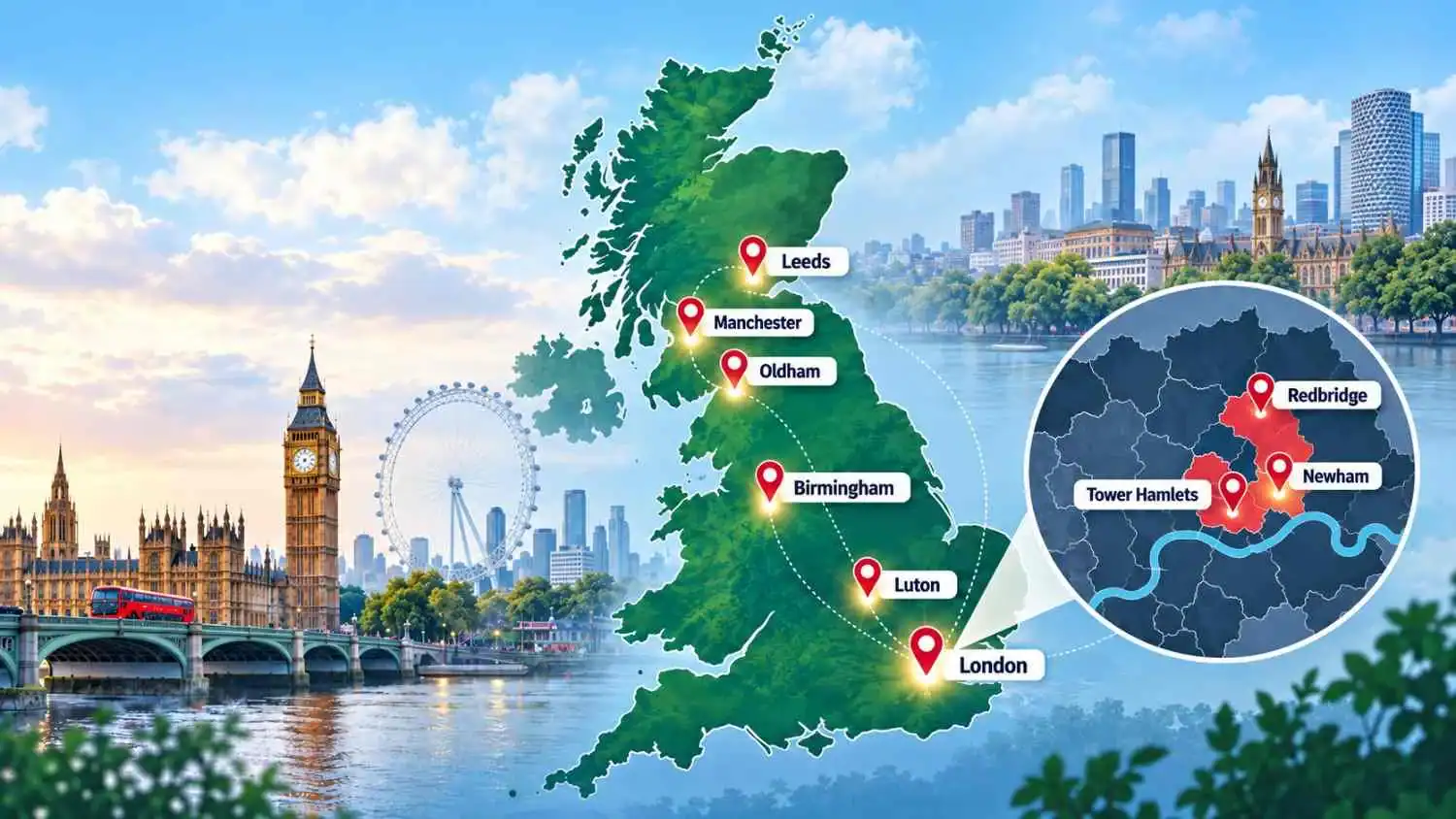
The UK has one of the largest Bangla-speaking communities outside South Asia. London boroughs such as Tower Hamlets, Newham and Redbridge are well known for this, and there are also strong communities in Birmingham, Manchester, Oldham, Luton and Leeds. In the 2021 Census for England and Wales, Bengali (grouped with Sylheti and Chatgaya) appeared among the more common main languages after English.
That means demand for Bengali translation in the UK is steady and practical. It covers immigration papers, court documents, medical records, school certificates and business contracts.
The Bengali Script: Why It Matters for Translators
Bangla is written in its own script, often called the Bengali script. It is an abugida, which means each consonant carries a built-in vowel that can be changed with marks around the letter. There are no capital letters, and many consonants join together into compound forms.
To a non-reader, a Bangla document can look like a block of curved shapes. To a trained translator, small details carry a lot of meaning. Here are a few that often catch people out:
- Bengali numerals. Dates, amounts and ID numbers may use ০১২৩৪৫৬৭৮৯ instead of 0123456789. One misread digit can change a date of birth or a bank balance.
- Name spelling. A name such as মোহাম্মদ can appear in English as Mohammad, Muhammad, Mohammed or Md. The English spelling must match the passport or the rest of the application.
- Stamps and handwriting. Many Bangladeshi certificates carry handwritten entries, seals and registrar stamps. Each of these needs to be recorded in the translation.
- Calendar dates. Some documents use the Bangla calendar alongside the Gregorian one. A careful translator will note which system is being used.
Dialects: Standard Bangla, Sylheti, Chittagonian and More
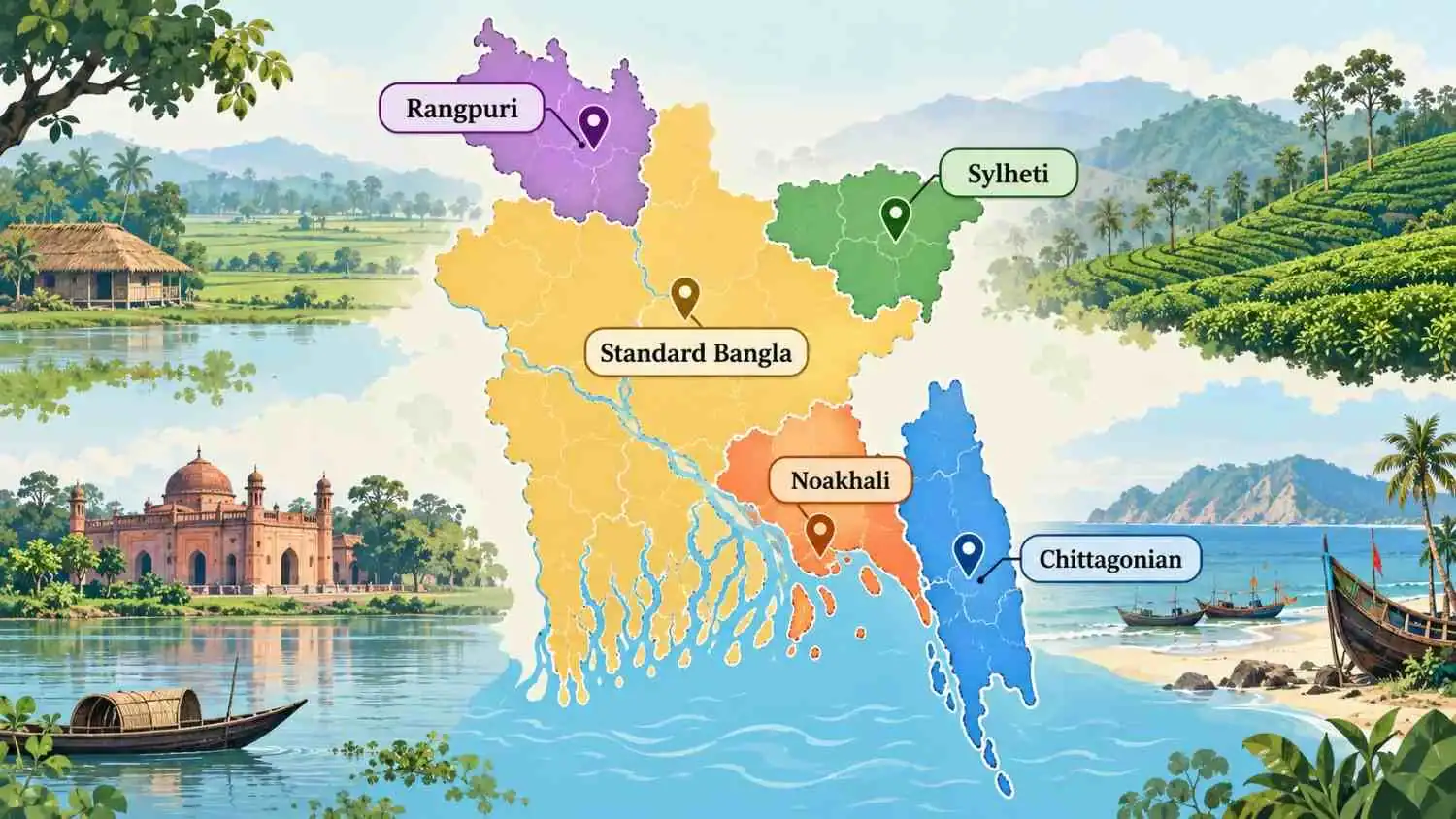
Like any large language, Bangla has regional varieties. The standard spoken form is used in education, media and formal writing. Alongside it you will find strong regional speech such as Sylheti, Chittagonian, Noakhali and Rangpuri.
There is also an older split between Sadhu bhasha, a formal literary style, and Cholito bhasha, the everyday standard used today. Modern documents almost always use the second.
Why Sylheti Deserves a Special Mention in the UK
A large share of British Bangladeshi families trace their roots to Sylhet. Many speak Sylheti at home, even though they read and write standard Bangla. Linguists sometimes debate whether Sylheti is a dialect or a separate language, but in practice the answer matters less than the need.
If a hearing, a medical appointment or a Home Office interview is involved, the interpreter must understand the speaker’s actual dialect, not only the textbook version. You can read more about this on our Sylheti language page and in our article on why Sylheti to English translation matters.
Bangla vs Bengali in UK Official Documents
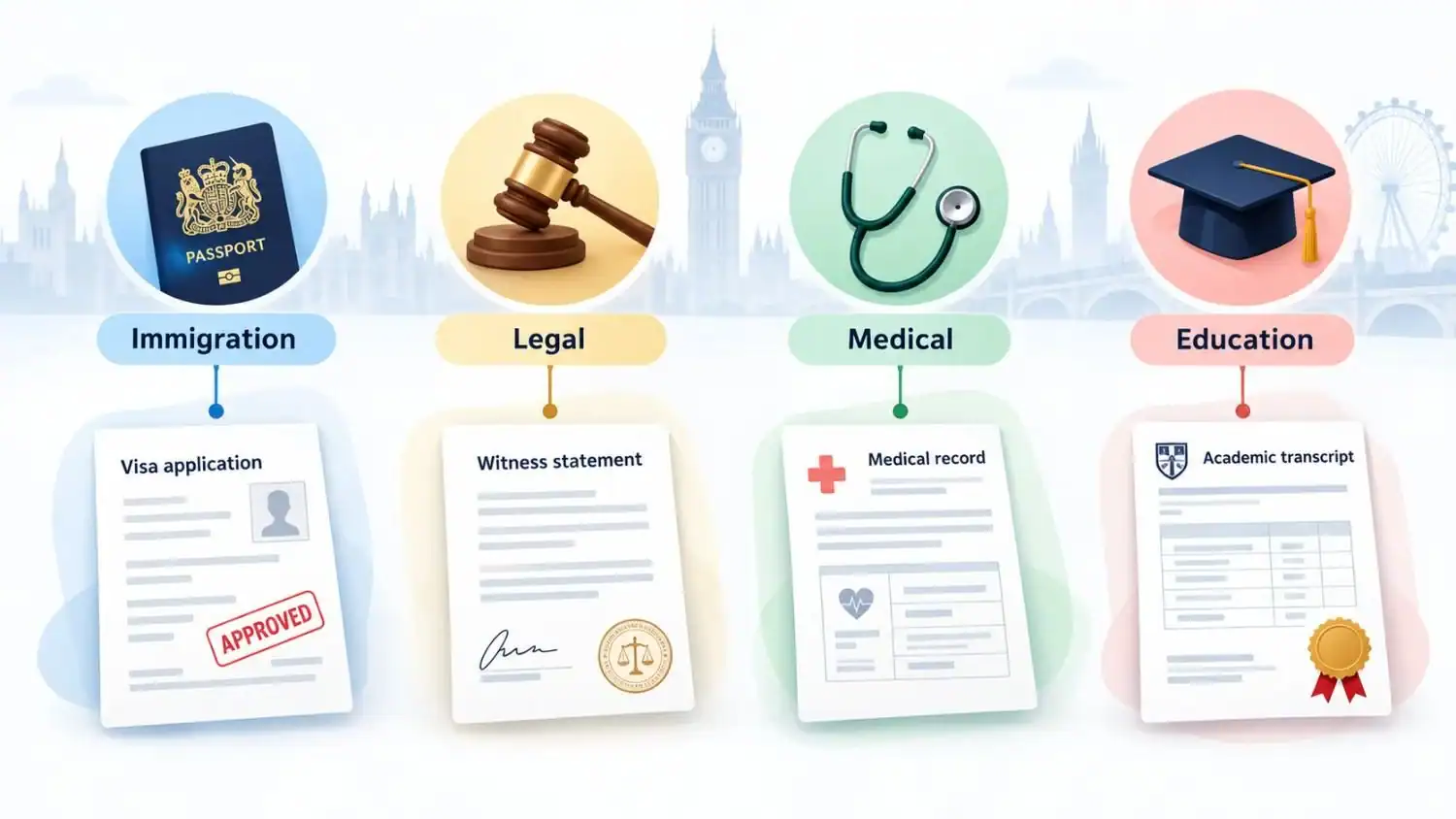
For official use, the name of the language rarely creates a problem. The quality and format of the translation do. Here is how it plays out in the most common situations.
Immigration and Visa Applications
If a document is not in English, UK Visas and Immigration generally expects a full translation with a signed statement from the translator. That statement normally confirms the translation is accurate, gives the date, and includes the translator’s name and contact details. Requirements can change, so always check the latest gov.uk guidance for your route.
We cover this in more detail in our guides to Bangla immigration translation, visa application translation and Bangla translation for asylum cases. Students may also find our page on Bengali to English translation for a UK student visa useful.
Courts and Legal Matters
Court bundles, witness statements, affidavits and marriage or divorce records all need precise legal wording. A casual or machine-made translation can create real problems. Our guide on how to translate legal documents for UK courts explains the process, and our Bangla legal translation and interpreting page shows how we support it.
Health and Social Care
Accurate language is a safety issue in healthcare. A mistranslated dose, symptom or consent form can have serious consequences. See our overview of translation services in health and social care, as well as Bangla to English medical translation and medical translation in London.
Education and Finance
Universities, colleges and banks often ask for translated transcripts, degree certificates and statements. Our pages on Bangla academic translation and Bangla bank statement translation explain what is usually required.
Is Bangla Translation Different from Bengali Translation?
No. Bangla translation and Bengali translation describe the same service. A translator who works from Bangla into English is, by definition, doing Bengali to English translation.
What does change is the type of work. A birth certificate, a legal affidavit, a medical report and a marketing brochure each need a different skill set and tone. This is why it helps to look for a translator with experience in your specific document type, not only the language name. For general document work, see our Bangla documents translation service and our main Bangla translation page.
Translation and interpreting are also different jobs. Translation deals with written text. Interpreting deals with spoken words, either in person or remotely. If you need someone for a meeting or appointment, take a look at our Bangla interpreting services.
How to Translate Bengali to English Properly: A Simple Process
If you need to translate Bengali to English for an official purpose, these steps keep things smooth.
- Check who is asking. Find out whether the Home Office, a court, a university or an employer needs the translation, and read their exact rules.
- Gather clear copies. Scan every page, including the back, stamps and seals. Blurry or cropped files cause delays.
- Confirm the spelling of names. Send a copy of the passport so the English spelling matches across all documents.
- Choose a certified translator. Ask whether the translation will include a signed certification statement.
- Review the draft. Check names, dates, numbers and addresses carefully before you submit anything.
- Keep the originals safe. Submit copies unless the authority specifically asks for originals.
For a deeper look at certified work, read our certified Bangla to English translation guide.
Common Mistakes to Avoid
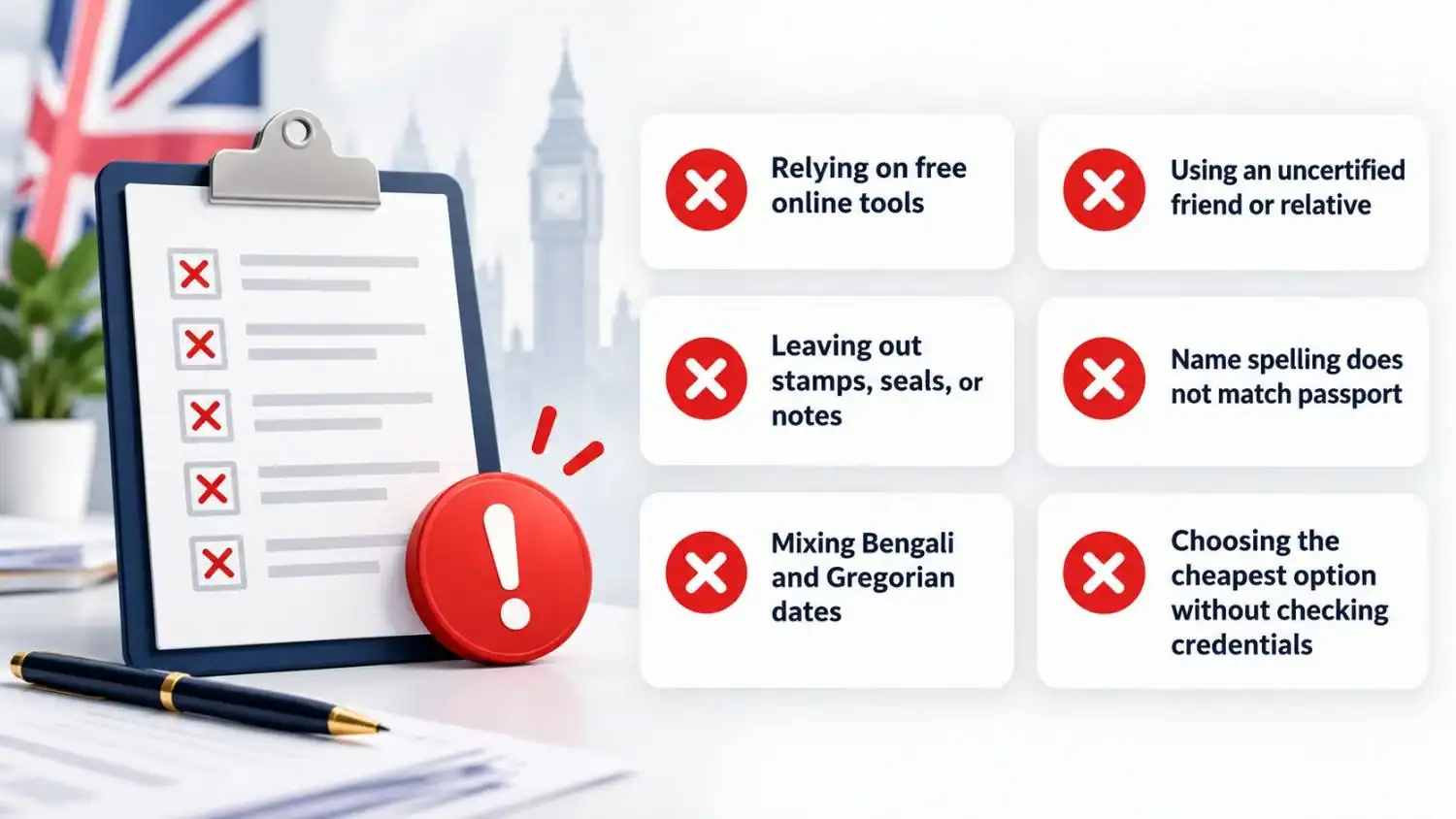
Over the years, the same few errors appear again and again. Avoiding them can save you weeks.
- Relying on free online tools for official documents.
- Using a bilingual friend or relative who has no certification.
- Leaving out stamps, seals, margin notes or the reverse side of a page.
- Spelling a name differently from the passport.
- Mixing up Bengali and Gregorian dates without noting it.
- Choosing the cheapest option without checking credentials.
Our article on common official document translation mistakes goes through these in more depth.
How to Choose a Bengali Translator in the UK
A trustworthy provider is open about who does the work and how it is checked. Here is a short checklist you can use.
- Native-level skill in both languages, with proven experience in your document type.
- Clear certification wording that meets UK authority requirements.
- Transparent pricing with no hidden extras.
- Confidential handling of personal papers.
- Real contact details and a quick, human response.
Price is a common worry. Rates depend on length, difficulty, urgency and certification. Our guides on Bangla translation cost in the UK and how much you should pay for translation services give a realistic picture. You can also learn more about our trusted translators or contact us for a quote.
Conclusion
So, what is the answer to Bangla vs Bengali? They are the same language. Bangla is the name used by its speakers. Bengali is the name used in English. Neither is incorrect, and both are fine in everyday conversation.
What really matters, especially in the UK, is getting the translation right. That means a qualified translator, a clear certification statement, careful handling of names and numbers, and an understanding of regional speech such as Sylheti. When those pieces are in place, the language label stops being a concern and your document does its job.
If you need help with Bengali translation or Bangla translation anywhere in the UK, our team is ready to help. Visit our Bangla translation service page or get in touch today.
Frequently Asked Questions
Is Bangla the same as Bengali?
Yes. Bangla and Bengali are two names for one language. Bangla is the native name, and Bengali is the English name. The grammar, script and vocabulary are identical.
Which is correct, Bangla or Bengali?
Both are correct. Use “Bangla” when speaking with native speakers or when you want to follow Bangladeshi usage. Use “Bengali” for most UK forms, official systems and English-language searches.
Do I need a different translator for Bangla and Bengali documents?
No. A qualified translator who works between Bangla and English can handle both. It is more important to choose someone with experience in your document type, such as legal, medical or immigration papers.
Can I translate Bengali to English with Google Translate for a UK visa?
It is not a safe choice. Machine tools often miss context, mix up names and cannot provide the signed certification that many UK authorities expect. A human certified translator is the reliable route.
Is Sylheti a part of Bengali?
Sylheti is closely related to Bangla and is often counted as a dialect, although some linguists treat it as a separate language. Most Sylheti speakers in the UK read and write standard Bangla, so documents are usually translated from standard Bangla while interpreting may need a Sylheti speaker.