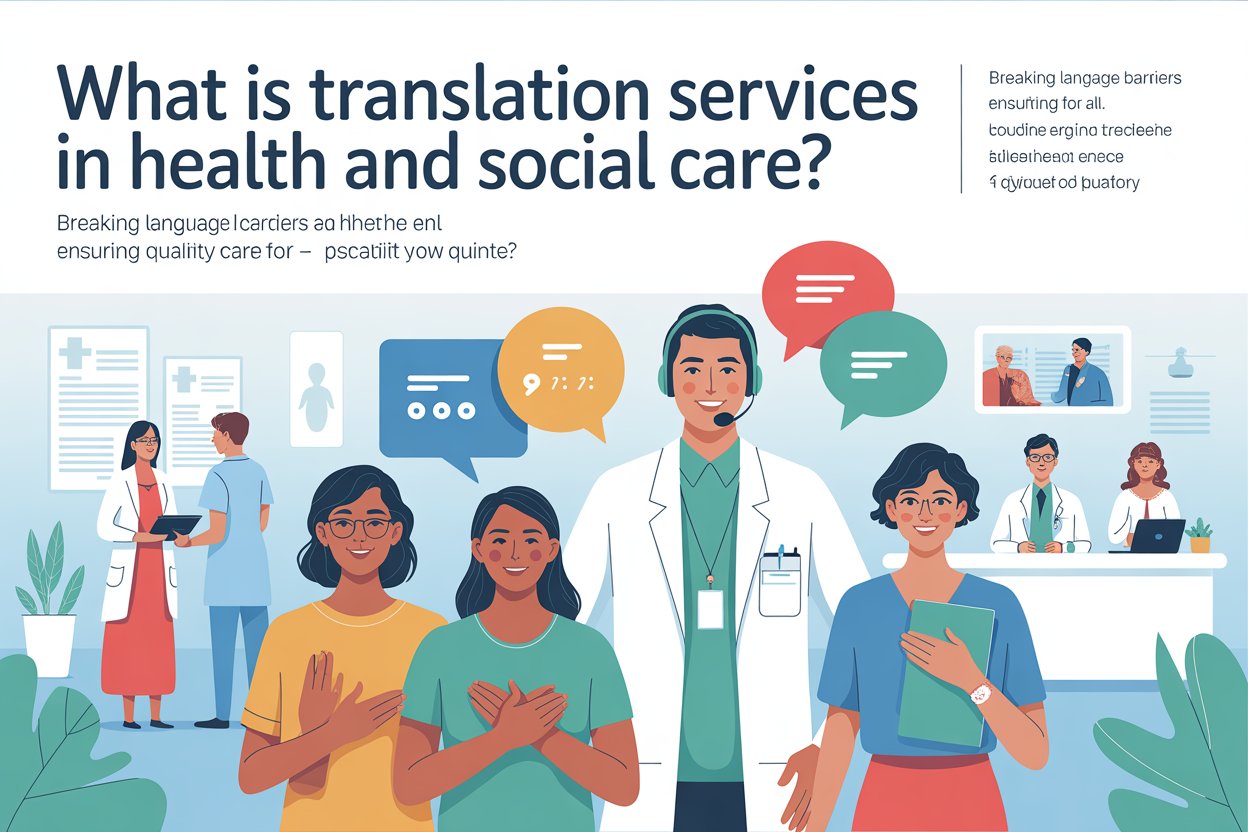
If a patient can’t read their discharge letter, or a family carer can’t make sense of a care plan, the whole point of that document falls apart. That’s what translation services in health and social care are for — turning medical and care-related paperwork into a language the person actually understands, so nobody has to guess at what they’ve been told.
In the UK, this isn’t just good practice. The NHS and social care providers have a legal duty to make sure people can access and understand information about their own care. Below, we’ll walk through what these services cover, who is entitled to them, which documents usually need translating, and how translation differs from interpreting.
Quick answer: Translation services in health and social care convert written documents — care plans, discharge summaries, consent forms, assessments — into another language, so patients and service users can understand and act on them. In the UK, this support is a legal entitlement under the Equality Act 2010 and the NHS Accessible Information Standard, and it’s usually free through the NHS or a local authority.
A note on what we do: setranslations.uk provides professional document translation only. We translate the wording exactly as it’s given to us and don’t check whether the original document is genuine, legally valid, or medically accurate — that responsibility stays with the person or organisation providing it.
What Is Translation Services in Health and Social Care?
Translation services in health and social care means taking a written medical or care document — a discharge letter, a care plan, a consent form, a referral letter — and rendering it accurately in another language, so patients, carers and social care teams are all working from the same understanding.
It’s a narrower job than it sounds. A good translator in this field isn’t just bilingual; they know how NHS letters are structured, how social care assessments are worded, and where a single mistranslated term could change a treatment decision or a support entitlement. That’s the standard we work to on every job.
Do You Have a Legal Right to Translation in the UK?
Yes — and it’s worth knowing this, because too many people assume it’s a courtesy rather than a right. Under the Equality Act 2010 and the NHS Accessible Information Standard, NHS and adult social care providers must make sure the information they give you is genuinely accessible — including through translation and interpreting where a language barrier gets in the way. The General Medical Council expects the same from individual clinicians, too.
| What the law says | What it means for you |
|---|---|
| Equality Act 2010 | Public bodies, including the NHS, must not put you at a disadvantage because of language. |
| NHS Accessible Information Standard | Your communication needs must be recorded and met at every NHS and social care touchpoint. |
| GMC guidance for clinicians | Doctors must make reasonable effort to communicate clearly if English isn’t your first language. |
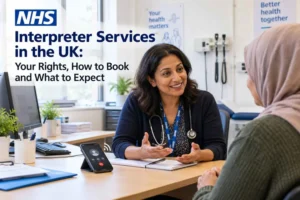
In practice, this means your GP surgery, hospital or social worker should arrange interpreting for appointments and translation of key documents at no cost to you — not leave it to a relative to translate something as sensitive as a diagnosis.
Translation vs Interpretation: What’s the Difference?
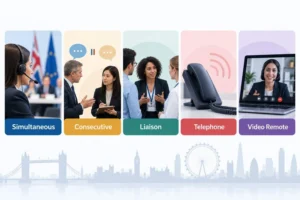
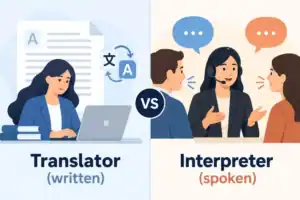
People use these two words interchangeably, but they’re not the same job:
- Translation — converting written text, such as a discharge summary or a care plan letter, into another language.
- Interpretation — converting spoken conversation in real time, for example during a GP appointment or a social work visit.
When people ask about translation services in health and social care, they’re usually asking about the written side of this work — document translation. We don’t sit in on appointments or explain medical terms out loud; our job is producing an accurate written version of whatever you give us. If you need someone in the room or on the phone during an appointment, that’s interpreting, which is a separate service.
Documents That Commonly Need Translating
Here’s what typically needs translation services in health and social care, split roughly between healthcare and social care:
| Healthcare documents | Social care documents |
|---|---|
| Discharge summaries and referral letters | Needs assessments and support plans |
| Consent forms | Safeguarding reports |
| Test and laboratory results | Housing assessments |
| Vaccination records | Correspondence with local authorities |
| Mental health assessments | Care plan reviews |
| GP letters and treatment plans | Information leaflets for service users |
Some of these — court-facing safeguarding reports, or documents going to a local authority for a formal decision — need to be certified rather than just translated. We also handle a lot of Bangla to English medical translation specifically, given how often we’re asked for it.
Supporting Vulnerable Service Users
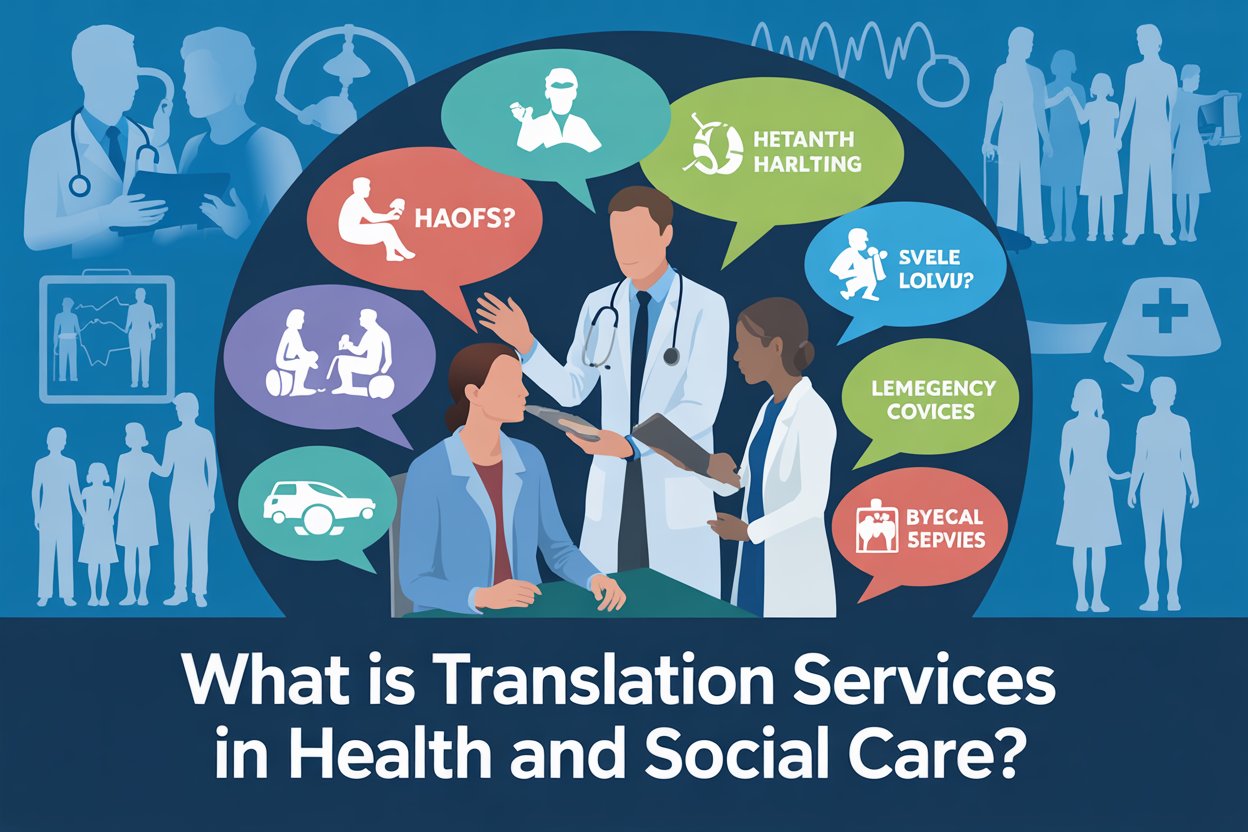
This is where translation services in health and social care make the most practical difference. Elderly service users, people with limited mobility, and those going through a safeguarding process are often the ones who most need this support — and the ones least able to chase it up themselves. A translated care plan doesn’t help much if nobody explains it afterwards, so translation works best alongside a social worker or carer who checks the person has actually understood it, not just received it.
Why Accuracy Matters for Patient Safety
A mistranslated dosage, a missed allergy note, or a consent form that says something slightly different from the original — any of these can lead straight to the wrong treatment. This is exactly why translation services in health and social care can’t be treated as a generic language task, or handed to general-purpose bilingual staff or free online tools. It calls for a translator who understands medical terminology and treats every line as if it matters, because it does.
Common Challenges in This Type of Translation
- Technical terminology — medical and care-related language rarely has one clean equivalent in another language.
- Formal register — social care correspondence is usually written in formal, procedural English, and the tone needs to carry over.
- Cultural context — some terms, particularly around mental health, need careful handling so nothing is lost or misread.
- Confidentiality — these documents contain sensitive personal data, so secure handling isn’t optional.
How to Access Translation and Interpreting Services
If you need translation services in health and social care through the NHS or a local authority in the UK, here’s where to start:
- Ask your GP practice, hospital department or social worker to arrange an interpreter or translation directly — this is normally free for NHS and publicly funded social care.
- Ask for your preferred language and any communication needs to be recorded on your file, so it carries over to future appointments and letters automatically.
- Go through a professional provider for anything outside the NHS pathway — personal documents, private healthcare correspondence, or paperwork you need certified for an official process.
If that’s you, request a quote from our team and we’ll confirm cost and turnaround before you commit to anything.
Why Not Just Use Machine Translation?
Free translation tools simply weren’t built for translation services in health and social care work. Medical and care terminology is too specific, and it doesn’t take much for something to go wrong — a dropped negative, a mistranslated instruction, a term rendered too literally. Any of these can change what a document is actually telling someone. Professional translators stick to the source text, use the right terminology for the sector, and handle personal data properly — none of which a machine can promise on a document that affects someone’s care.
Frequently Asked Questions
What exactly counts as translation services in health and social care?
Anything written that affects a person’s care or support — discharge letters, care plans, consent forms, assessments, and correspondence with the NHS or a local authority. If it’s spoken rather than written, that’s interpreting, not translation.
Is translation in health and social care free in the UK?
For NHS treatment and publicly funded social care, interpreting and translation of essential documents are normally arranged free of charge by the provider. Private translation of personal documents is a paid service.
Who is responsible for arranging it — the patient or the NHS?
The NHS or social care provider is responsible for arranging interpreting and translation once a communication need has been identified, under the Accessible Information Standard.
Can a family member translate medical documents instead?
It’s best avoided for anything beyond simple, non-clinical information. Untrained bilingual relatives can easily miss or misjudge medical terminology, which is exactly where mistakes cause the most harm.
Does setranslations.uk check whether a document is genuine?
No. We translate the content exactly as it’s supplied. Verifying or authenticating the original document is the responsibility of the client or the organisation requesting it.
Conclusion
Translation services in health and social care exist for one reason: so language never becomes the reason someone doesn’t understand their own care. In the UK, that support is a legal right, not a favour — and knowing that is often the first step to actually getting it.
Need a document translated for health or social care use? Get in touch with SE Translations for a fast, confidential quote.