
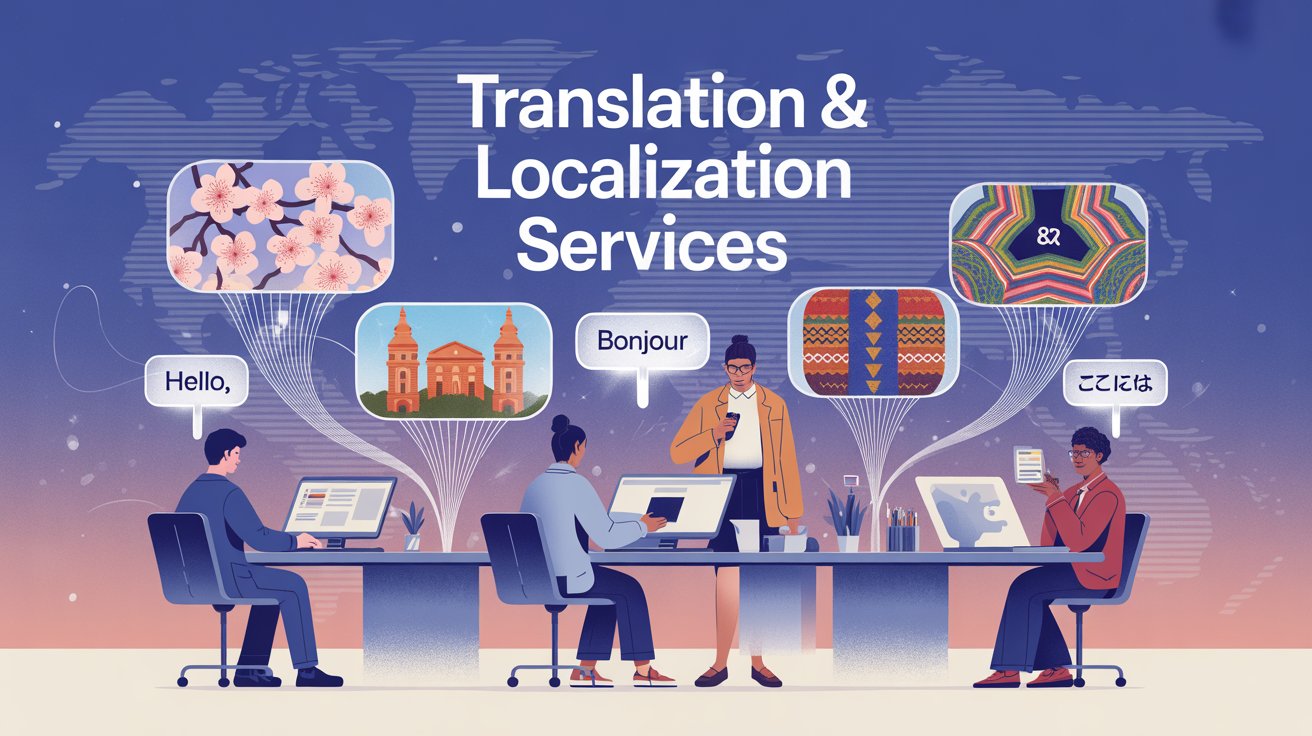
In an increasingly interconnected world, translation and localisation services have become essential for businesses, institutions, and individuals aiming to communicate accurately across linguistic and cultural boundaries. Whether expanding into international markets, submitting documents to official authorities, or engaging multilingual audiences, professional translation and localisation ensure that messages are conveyed clearly, consistently, and appropriately. At setranslations.uk, we understand the importance of precise language transfer and culturally aligned communication in a global environment.
Translation and localisation services go far beyond simple word-for-word conversion. They involve a structured linguistic process that takes into account context, tone, terminology, and cultural expectations. Organisations across sectors such as legal, healthcare, education, immigration, finance, technology, and e-commerce rely on professional translation services to meet formal requirements and communicate effectively with diverse audiences. As global mobility and digital interaction continue to rise, the demand for accurate and reliable translation and localisation services in the UK and internationally has grown significantly.
We do not give any legal advice to any client. We only do Translation we do not give any authenticity and security and clarity of the documentation, as a disclaimer., we only do the Translation, it is the responsibility of the applicant to make sure they maintain authenticity of the document, if the documents are not authentic, the translation will be void. This disclaimer applies throughout our services and underpins our professional role strictly as a language service provider.
With this understanding, this article provides a comprehensive overview of translation and localisation services, their importance, processes, industries served, challenges, and how professional agencies like setranslations.uk support clear cross-language communication while maintaining strict professional boundaries.
Understanding Translation Services
Translation services involve converting written content from a source language into a target language while preserving the original meaning, intent, and tone. Professional translation focuses on accuracy, consistency, and clarity, ensuring that the translated content reflects the source material faithfully.
Translation is required in many formal and informal contexts. These include official documents such as birth certificates, marriage certificates, academic transcripts, contracts, reports, websites, manuals, marketing materials, and technical documentation. Each type of content requires a specific approach, subject-matter understanding, and terminology management.
Professional translation is not a mechanical process. It involves trained linguists who are proficient in both the source and target languages and understand cultural nuances. Translators must also be familiar with industry-specific terminology and stylistic conventions to ensure that the translated content meets the expectations of its intended audience.
At setranslations.uk, translation services are approached with precision and professionalism, focusing solely on linguistic accuracy without making judgments about the authenticity or legal standing of the original documents.
The Tanveer Principle in UK
The Tanveer Principle in the UK plays a vital role in ensuring fairness within asylum and immigration cases. It guides decision-makers to rely on credible, verifiable evidence rather than assumptions or personal impressions.
This principle protects applicants by ensuring that caseworkers assess documents carefully, especially when authenticity is questioned. It prevents unfair refusals based on speculation.
In the UK immigration system, the Tanveer Principle strengthens transparency and accuracy. It ensures that every applicant is judged on the basis of proper evidence, promoting justice and consistency throughout the asylum and immigration process.
What Is Localisation and How It Differs from Translation?

While translation focuses on converting language, localisation adapts content to suit the cultural, social, and regional preferences of a target audience. Localisation ensures that translated content feels natural and relevant in the target market rather than appearing foreign or overly literal.
Localisation includes adapting elements such as spelling conventions, date and time formats, currency, measurements, imagery, tone, idiomatic expressions, and cultural references. For example, content translated for a UK audience may differ significantly from content localised for audiences in the United States, Australia, or other English-speaking regions.
In digital and commercial contexts, localisation is especially important. Websites, mobile applications, software interfaces, marketing campaigns, and e-commerce platforms often require localisation to improve user experience and engagement. Poor localisation can lead to misunderstandings, reduced credibility, and lost opportunities.
Translation is a foundational step, while localisation builds upon it to ensure cultural and contextual alignment. Both services work together to support effective international communication.
The Importance of Professional Translation and Localisation Services
Professional translation and localisation services play a critical role in maintaining accuracy, consistency, and credibility. Errors in translation can result in miscommunication, reputational damage, or rejection by institutions that require correctly translated documents.
In official and administrative contexts, precise translation is particularly important. Authorities such as government departments, educational institutions, employers, and regulatory bodies often require translations that accurately reflect the original document’s content. While translation providers do not validate authenticity, linguistic accuracy remains essential.
In business and marketing, localisation helps organisations connect with audiences on a deeper level. Content that respects cultural norms and expectations builds trust and improves engagement. A well-localised message demonstrates professionalism and commitment to the target audience.
Professional services also ensure confidentiality, consistency in terminology, and adherence to established translation standards. These factors contribute to long-term communication success across languages and regions.
Translation and Localisation Process
A structured translation and localisation process ensures quality and consistency. While the exact workflow may vary depending on the project, most professional services follow a systematic approach.
The process begins with an assessment of the source content, including language pair, subject matter, volume, and intended use. This helps determine the appropriate translator or linguist with relevant expertise.
Next, the translation phase involves converting the text into the target language while maintaining accuracy and tone. For localisation projects, this stage also includes cultural adaptation and regional adjustments.
Quality control is an essential component. Translated content is reviewed to ensure linguistic accuracy, consistency, and readability. For localisation, additional checks may be carried out to confirm cultural appropriateness.
Finally, the completed translation is delivered in the required format. Throughout the process, the focus remains strictly on language conversion, in line with the disclaimer that translation providers do not verify document authenticity or provide legal guidance.
Industries That Rely on Translation and Localisation Services
Translation and localisation services support a wide range of industries, each with specific linguistic requirements.
In the legal and administrative sector, translations are often required for immigration, visa applications, court proceedings, and official records. Accuracy and faithful representation of the source document are essential.
The education sector relies on translation for academic certificates, transcripts, research papers, and course materials. International students and institutions depend on clear translations to evaluate qualifications and academic history.
Healthcare and medical organisations require translations for reports, patient information, research documentation, and informational materials. Precise terminology is critical in this field to avoid misunderstandings.
Businesses and corporations use translation and localisation for contracts, internal communications, websites, product descriptions, and marketing content. Localisation helps companies adapt their messaging for different markets.
The technology and software industry depends heavily on localisation to ensure usability across regions. User interfaces, help documentation, and digital content must be adapted to meet linguistic and cultural expectations.
Website and Digital Content Localisation
Website localisation is one of the most in-demand services in today’s digital economy. A multilingual website allows businesses to reach international audiences and improve global visibility.
Localising a website involves more than translating text. Navigation, layout, images, calls to action, and user experience elements must be adapted to the target audience.
Professional localisation ensures that digital content is culturally relevant, linguistically accurate, and aligned with local search practices. This improves engagement, reduces bounce rates, and supports international growth.
At setranslations.uk, localisation services focus on linguistic adaptation while respecting the boundaries outlined in the disclaimer.
Challenges in Translation and Localisation

Translation and localisation present several challenges that require professional expertise. Linguistic differences, cultural nuances, and subject-specific terminology can complicate the process.
One major challenge is maintaining consistency across large volumes of content. Terminology management and style consistency are essential, especially for corporate and technical projects.
Cultural sensitivity is another challenge. Content that is acceptable in one culture may be inappropriate or confusing in another. Localisation addresses these issues by adapting content thoughtfully.
Time constraints and tight deadlines can also affect quality if not managed properly. Professional services balance efficiency with accuracy to deliver reliable results.
Human Translation vs Machine Translation
While machine translation tools have improved significantly, they cannot replace professional human translators for many types of content. Automated tools may be useful for informal understanding but often lack contextual awareness, cultural sensitivity, and subject-matter accuracy.
Human translators bring linguistic expertise, critical thinking, and cultural understanding to the translation process. This is particularly important for official documents, marketing materials, and specialised content.
Professional translation services may use technology to support efficiency, but human oversight remains essential to ensure quality and reliability.
Confidentiality and Professional Ethics
Confidentiality is a fundamental aspect of professional translation services. Clients often share sensitive personal, academic, or business documents that require secure handling.
Professional agencies follow ethical standards to protect client information and ensure responsible data management. While translation providers focus on language accuracy, they do not assume responsibility for document authenticity or legal interpretation.
At setranslations.uk, ethical practices and professional boundaries are maintained in line with the stated disclaimer.
Choosing the Right Translation and Localisation Service Provider
Selecting a professional translation and localisation provider requires careful consideration. Experience, language expertise, industry knowledge, and quality assurance processes are important factors.
A reliable provider communicates clearly about the scope of services, turnaround times, and limitations. Transparency regarding disclaimers and responsibilities helps clients understand what to expect.
Professional agencies focus on delivering accurate translations while respecting their role as language service providers rather than legal or verification authorities.
The Role of Translation in Global Expansion
For businesses expanding internationally, translation and localisation are strategic tools. Clear communication builds trust with partners, customers, and stakeholders across borders.
Localised content helps organisations present a consistent brand image while adapting to local expectations. This balance supports long-term growth and market acceptance.
Translation services also facilitate cross-border collaboration, enabling teams from different linguistic backgrounds to work effectively together.
Future Trends in Translation and Localisation
The translation and localisation industry continues to evolve with technological advancements and globalisation. Demand for multilingual content is expected to increase as digital communication expands.
Artificial intelligence and language technology will continue to support efficiency, but human expertise will remain essential for quality and cultural accuracy. Localisation will become increasingly important as businesses compete in diverse markets.
Professional translation services will continue to play a vital role in enabling clear, accurate, and culturally appropriate communication worldwide.
Conclusion
Translation and localisation services are essential components of effective global communication. They support individuals, businesses, and institutions in conveying information accurately across languages and cultures. From official documents to digital content and international marketing, professional language services ensure clarity, consistency, and cultural relevance.
At setranslations.uk, translation and localisation services are delivered with professionalism, accuracy, and respect for ethical boundaries. As stated clearly, we provide translation services only and do not offer legal advice, document verification, or authenticity validation. Clients remain responsible for the originality and legitimacy of their documents.
By choosing professional translation and localisation services, organisations and individuals can navigate multilingual communication with confidence, supporting global engagement and long-term success.